Bubble Pop! Puzzle Game Legend
- 4.6
- Rating
- 10.00M
- Installs
- Free
- Price
 Analysis by App-foxy
I usually reach for a bubble shooter when I want something familiar, quick to understand, and easy to pause. Bubble Pop! Puzzle Game Legend fits that mood well. It is a free puzzle game from BitMango built around matching bubbles, clearing arrangements, and deciding when to take a safe shot versus when to set up a better one. The basic idea is simple enough for a short break, but the later decisions can demand more attention than the cheerful presentation suggests.
After spending time with it, I see the game as a good middle ground between a completely casual time-killer and a more demanding puzzle title. You can play without learning complicated controls, yet careless shots can leave a board in an awkward state. That balance is the main reason it has attracted a 4.6 average from around 247 thousand ratings, with more than 10 million installs. Those figures suggest broad appeal, but they do not mean it will suit everyone. Players who dislike repeated match-three-style decisions or games that encourage continued progression may find its loop too familiar.
How the basic play loop works in everyday use
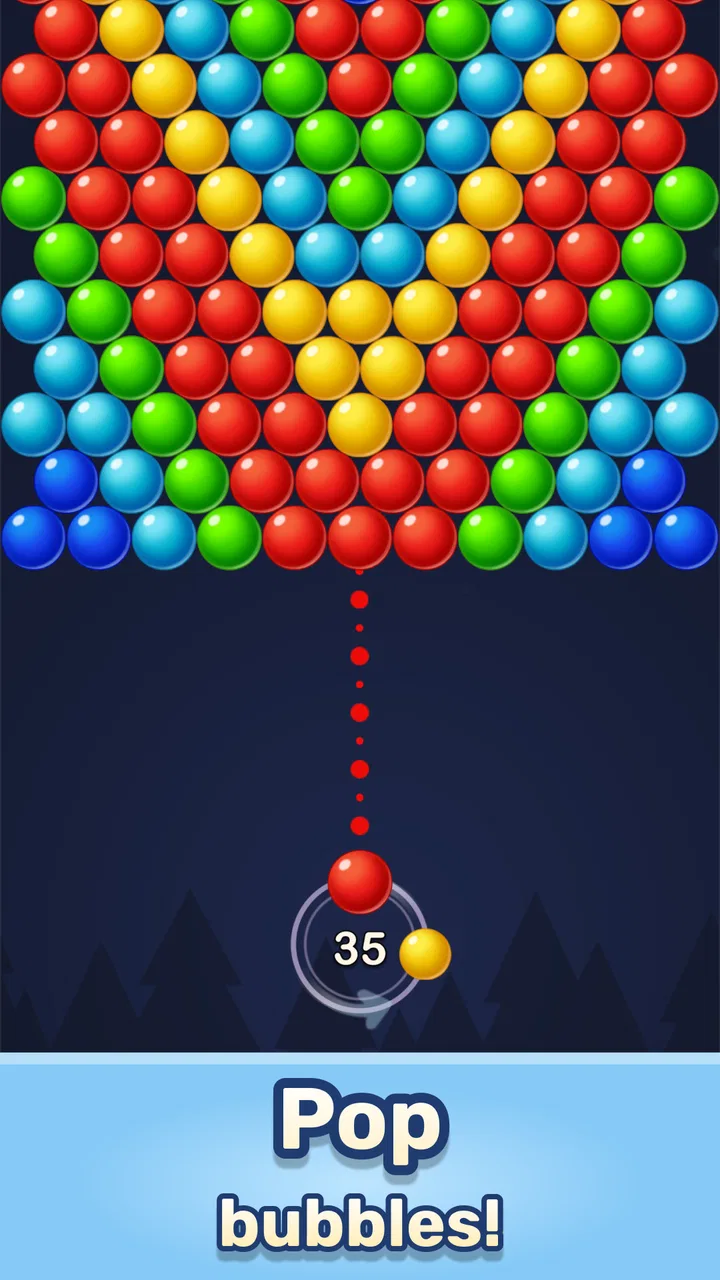
The first thing I noticed is how quickly a new player can begin. You aim a launcher, choose where the bubble should travel, and try to connect it with bubbles of the same color. Groups disappear when the match is large enough, opening space and sometimes causing a useful chain reaction. The controls are approachable, which makes the game suitable for playing with one hand during a commute, while waiting for an appointment, or during a short rest between tasks.
You May Also Like

 Pandora - Music & Podcasts
Pandora’s Music Is Easy to Start, but Harder to Recover
Pandora’s strength is its low-effort path from a seed to a station. Its weak spot is how much confidence it asks you to place in connection, setup, and quiet recovery.

 8 Ball Pool
 Is Built on Rivalries, Rematches, and Routine
A close look at the rivalries, rematches, shared routines, and unanswered safety questions that turn a quick pool match into a persistent mobile community.

 Samsung Music
’s Quiet Strength Is Playing What You Already Own
Its reach comes less from spectacle than from dependable access to a personal library. That simplicity is both the app’s strongest retention engine and its ceiling.

 AccuWeather: Weather Radar
AccuWeather Review: A Quick, Clear Forecast for Everyday Decisions
For everyday plans, the best forecast is the one you can understand quickly. AccuWeather makes rain timing, radar, and local conditions easy to act on, with a few trade-offs.

 Hill Climb Racing
Why Hill Climb Racing Still Turns Crashes Into One More Run
A tiny car, a bumpy hill and one more upgrade: Hill Climb Racing keeps resurfacing because its simple chaos makes every near-miss feel personal.

 AliExpress - Shopping App
AliExpress Makes Global Shopping Feel Personal, but Shoppers Bear the Risk
AliExpress turns a global marketplace into a pocket-sized discovery engine. Its reach is useful, its shopping loop compelling, and its trade-offs easy to miss.
More From Our News Desk
View All News


A normal session does not require a long commitment. I can complete a small stretch of play, stop, and return later without needing to remember a complicated story or a large collection of rules. That makes the game more convenient than puzzle titles that depend on extended concentration. It also means the experience can feel repetitive if I play for a long period without changing my approach.
The important habit is to stop treating every shot as an immediate match. A direct hit may clear a few bubbles, but a less obvious angle can reach a supporting group above it and remove much more of the structure. I found it useful to spend a moment checking the ceiling, side walls, and the bubbles holding larger clusters in place. The best move is often the one that changes the board rather than the one that produces the most visible match right away.
For a realistic everyday example, imagine playing while waiting for a coffee order. I would not try to rush through several levels. Instead, I would use the short session to focus on one repeatable skill: looking for a shot that removes a support point. That approach keeps the game relaxing while still giving the round a small objective. It is more satisfying than firing bubbles randomly and hoping a chain reaction solves the problem.
Why the simple controls still reward attention
The aiming line is more useful when treated as a planning tool rather than a guarantee. Shots that bounce from a wall can reach spaces that seem blocked, but the angle needs to be judged carefully. I usually line up the first part of the path, then consider where the bubble will travel after the bounce. This is especially helpful when a direct route would attach a bubble to the wrong side of a cluster.
Another practical habit is to avoid spending a useful color merely because it is available. If the current bubble has no worthwhile match, I look for a safe place where it will not make the next arrangement harder. A temporary attachment can preserve a future opportunity, while a careless placement may cover the route needed for a larger clearance. This is one of the game’s quiet trade-offs: the board rarely punishes you with complicated rules, but poor positioning can reduce your options.
The game is also more enjoyable when I accept that not every board can be solved with a perfect-looking move. Sometimes the sensible choice is to reduce clutter and keep the remaining bubbles accessible. Chasing a dramatic chain every turn can create a worse position than making a modest match. That distinction is useful for beginners because it replaces guesswork with a manageable question: which shot leaves me with the most workable board?
Settings and device habits worth checking
Before settling into regular play, I recommend checking the available in-game settings rather than assuming the default arrangement is ideal. The most useful adjustments are usually the ones that affect sound, music, notifications, and general comfort. I prefer quieter feedback when playing in public and a less distracting setup when I am using the game to unwind before sleep. These choices do not change the puzzle itself, but they can make short sessions feel much less intrusive.
It is also worth checking how the game behaves on your particular phone or tablet. Bubble Pop! Puzzle Game Legend supports devices running Android 6.0 or later, and the current version is 2616.1.0. A player with an older device should pay attention to responsiveness and battery behavior after installation rather than judging the experience only from a newer phone. Smooth aiming matters in a game where a small change in direction can alter the result.
I would keep notifications limited if the game offers that control through its settings or the device itself. A puzzle that is meant to fill a spare minute can become annoying when it repeatedly interrupts other activities. On the other hand, someone who likes a gentle reminder to return to a level may prefer leaving selected notifications active. The right choice depends on whether you use the game as a planned break or as an occasional distraction.
The free entry point is another practical advantage. You can try the core experience without paying upfront, while optional in-app purchases range from $0.49 to $99.99 per item. I would treat that range as a reason to decide on a personal spending boundary before playing regularly. The game is perfectly reasonable as a no-cost pastime, but players who are tempted by convenience purchases should use the purchase controls on their device and avoid making decisions in the middle of a frustrating board.
Repeatable patterns that make shots more efficient
Experienced play is less about speed than about reducing wasted shots. My first repeatable pattern is to inspect the color sequence before committing to a move. If the current color is not useful, I consider where it can be parked without blocking a future route. This is a small adjustment, but it prevents the common beginner mistake of treating every bubble as something that must be matched immediately.
The second pattern is to search for structural weaknesses. A group may look large and intimidating, yet it can depend on a narrow connection. Removing that connection can clear a broad section with fewer shots than attacking the visible mass. I look from the top downward and ask which bubbles are acting as supports. This method is more reliable than focusing only on the largest same-color group.
Wall bounces deserve deliberate practice. Instead of using them only when a direct shot is impossible, I use them to approach a target from an unexpected side. The trick is to plan the final direction, not just the initial bounce. If the bubble reaches the target at a shallow angle, it may attach without creating the match I wanted. A slightly different launch point can turn the same idea into a clean clearance.
A third useful pattern is to preserve open lanes. When several colors are available, I prefer a move that keeps the central route visible over one that creates a large but awkward pile. Open space gives later bubbles more possible paths and makes wall shots easier to judge. This is particularly valuable when the board begins to feel crowded. Clearing a little less now can be the better long-term decision if it protects the next few shots.
I also recommend learning from failed rounds instead of immediately repeating the same move. When a board goes wrong, I try to identify the first decision that reduced my options. Was it an unnecessary match, a blocked lane, or a missed support point? Finding that moment creates a usable rule for the next attempt. The game does not require a formal training mode for this kind of improvement; a short mental review is enough.
Where the puzzle becomes less forgiving
The relaxed controls should not be mistaken for unlimited flexibility. As the arrangement becomes more demanding, a shot that seems harmless can make the next sequence difficult. The main limitation is that the game’s appeal depends heavily on its established bubble-shooter formula. If you want a deep narrative, extensive character development, or a broad strategic system beyond aiming and matching, this is not the right place to look.
Long sessions can expose another weakness: the basic action does not change dramatically. I enjoy the clarity during short breaks, but after extended play the repeated cycle of aiming, matching, and clearing can lose some of its freshness. Players who need constant novelty may prefer a puzzle game with rotating mechanics or a stronger campaign structure. This title works best when its simplicity is a benefit rather than something you expect it to overcome.
Optional purchases may also affect how different players experience progression. Since the game is free and includes purchasable items, someone who wants a completely pressure-free environment should decide in advance not to spend or should use device-level purchase protections. I do not see that as a reason to dismiss the game, but it is an important part of choosing it responsibly. A player who prefers a single upfront payment with no purchase prompts may be happier with a premium puzzle alternative.
The Everyone content rating makes it approachable for a broad audience, including families looking for a nonviolent puzzle activity. Still, younger players may need guidance around optional purchases and screen time. The game’s easy controls can make it tempting to continue from one round to the next, so setting a stopping point is sensible. For adults, the same quality is useful when the goal is a quick mental reset rather than an evening-long gaming session.
Who should install it and who should skip it
I would recommend this game to someone who enjoys classic bubble-shooter rules, wants short sessions, and appreciates a challenge that grows from positioning rather than complicated instructions. It is also a good choice for players who want a free puzzle to keep on an older compatible Android device, provided the phone handles the current version comfortably. BitMango’s long-running release has the kind of familiar structure that makes it easy to share with a friend who does not normally play mobile games.
I would be more cautious about recommending it to people who dislike level-based repetition, purchase options, or games that rely on gradual improvement through repeated attempts. It is not a replacement for a logic game built around deduction, a word puzzle focused on vocabulary, or a strategy title with persistent planning between rounds. Those alternatives are better when you want a different kind of mental challenge rather than a polished version of bubble matching.
For families, the approachable presentation is a strength, but I would still make the purchase decision clear before handing over the device. For commuters and casual players, the ability to play in small pieces is more important than the lack of a complex story. For serious puzzle fans, the value depends on whether aiming and board management alone provide enough depth. I found that the game becomes more interesting when I impose my own goals, such as finishing a section with fewer wasted shots or practicing bounce angles.
My verdict after building a consistent routine
Bubble Pop! Puzzle Game Legend succeeds because it understands the appeal of a straightforward bubble shooter and makes the first step almost effortless. I can open it, play for a few minutes, and still find room to improve through better angles, safer placements, and more careful attention to support points. The free price makes trying it easy, and the Everyone rating broadens its usefulness for casual households.
Its limits are equally clear. The core loop can feel repetitive, optional purchases may not suit every player, and anyone looking for a richer puzzle system should consider another category of game. I would not install it expecting a constantly changing experience. I would install it as a dependable short-session game where small improvements in decision-making make familiar mechanics more satisfying.
My strongest recommendation is to play deliberately rather than quickly. Check the board before firing, preserve open lanes, use wall bounces with a planned final angle, and treat an unused color as a positioning problem instead of an emergency. Those habits reveal more depth than the short store summary suggests. If that style of gradual mastery sounds enjoyable, this is an easy game to keep available for spare moments; if you need novelty, story, or a purchase-free premium experience, another puzzle title will likely serve you better.
FAQs for Bubble Pop! Puzzle Game Legend
01What is Bubble Pop! Puzzle Game Legend?
Bubble Pop! Puzzle Game Legend is a casual match-three puzzle game built around aiming and shooting colored bubbles. Players clear groups of matching bubbles, complete level objectives, and progress through increasingly challenging stages. The game is designed for quick sessions, making it suitable for relaxing gameplay, although later levels may require more careful planning and accurate shots.
02How do you play Bubble Pop! Puzzle Game Legend?
Gameplay is straightforward: aim the launcher toward clusters of bubbles and fire to connect three or more bubbles of the same color. Matching bubbles disappear, while unsupported bubbles may also fall and produce larger scores. Each level can include different targets, limited shots, obstacles, or special bubbles, so players need to think about angles and use available boosters strategically.
03Does Bubble Pop! Puzzle Game Legend work without an internet connection?
Many bubble-shooting levels can generally be played offline, which is convenient when traveling or when a stable connection is unavailable. However, certain features may require internet access, including advertisements, cloud synchronization, online events, rewards, or purchases. Availability can vary by version and device, so it is best to check the game’s current store description and test offline access after installation.
04Is Bubble Pop! Puzzle Game Legend free to download and play?
Bubble Pop! Puzzle Game Legend is typically available as a free download, allowing players to begin without paying upfront. Like many casual puzzle games, it may include optional in-app purchases for coins, lives, boosters, or other advantages. Advertisements may also appear between levels or during rewards. Players who want uninterrupted play should review the purchase and advertising information before downloading.
05Is Bubble Pop! Puzzle Game Legend suitable for children and casual players?
The simple controls and colorful presentation make Bubble Pop! Puzzle Game Legend accessible to children, families, and casual players who enjoy short puzzle sessions. Nevertheless, parents should review the age rating and privacy details because the game may contain advertisements, optional purchases, or online features. Younger players may also benefit from purchase restrictions enabled through the device’s parental controls.
Pros
- Simple tap-to-pop controls are easy for all ages to learn.
- Short levels make it convenient for quick gaming sessions.
- Colorful visuals and cheerful effects create a relaxing experience.
- Offline play is useful when you have limited or no internet access.
- Gradually harder puzzles provide a satisfying sense of progress.
Cons
- Some levels may feel repetitive after extended play.
- Frequent ads can interrupt the flow between rounds.
- Later puzzles may rely more on trial and error than strategy.
- Limited competitive features may disappoint players seeking multiplayer action.
- Extra moves or boosters may require in-app purchases.

Bubble Pop! Puzzle Game Legend
Gallery